

How to make branding work in hybrid organizations
In hybrid organizations, branding has become an operating model challenge. Teams across different regions, functions, and work models need clear guidance, access to current brand resources, and the freedom to act independently within defined standards. The brand must stay consistent while still being executed quickly, flexibly, and in a way that reflects local market needs.
Consistent branding has never been more complex or more important
Hybrid organizations combine centralized and decentralized structures, teams across locations, and flexible decision-making paths. This creates speed, but it also increases pressure on brand leaders. Consistency must be protected without slowing down agility. Today, a brand is no longer shaped only at headquarters. It is built at every touchpoint around the world.
This article explains why traditional control models are reaching their limits and how clear guardrails, enablement, and structure can strengthen brand identity over time. You will also get five practical approaches that can be applied directly to everyday work.
Why decentralized structures often lead to inconsistent branding
The more decentralized teams become, the harder it is to ensure a consistent brand experience across all channels and locations. Several challenges often arise:
-
Inconsistent brand execution because teams interpret “on-brand” in different ways
-
Slow processes because every activity must be approved by central teams
-
Unofficial workarounds when central systems are viewed as too rigid
-
Overloaded brand and communications teams that are expected to act as gatekeepers
As a result, the brand loses clarity and impact. The key question is no longer: How do we control the brand? The better question is: How do we enable teams across the company to act on-brand?
5 Tips for building a consistent brand across the company
1. Build brand culture through internal branding
A brand only becomes powerful when people inside the company understand it and live it. This is especially important in hybrid work models with remote employees and international locations. Internal branding also directly supports employer branding. Employees who understand and experience the brand can communicate it more credibly to the outside world.
What this means:
-
Offer structured brand onboarding and regular enablement sessions.
-
Engage remote teams through targeted digital formats.
-
Use internal campaigns and storytelling to communicate brand values.
-
Encourage knowledge sharing and best practices across regions.
Best practice:
Create intentional brand experiences in everyday work. Virtual brand sessions, inspiring use cases, and regular touchpoints can actively involve remote employees and strengthen their connection to the brand.
2. Use central platforms as the single source of truth
Decentralized teams need fast access to current brand content. A central platform ensures that everyone works with the same approved assets and official guidelines, regardless of location or role.
Digital asset management systems play a key role because they organize brand content in one central place and make it accessible to different teams, countries, and offices.
What this means:
-
Logos, images, templates, and campaign materials are used consistently.
-
Everyone has access to current, official brand guidelines.
-
Local teams spend less time coordinating with central teams.
-
Collaboration across regions becomes more efficient.
Best practice:
Do more than make brand guidelines available. Make them easy to use by connecting them directly with assets, templates, and real use cases in an intuitive platform.

3. Empower teams instead of controlling them
In decentralized organizations, branding only works when teams are able to act independently. Instead of relying on control, companies need to enable teams through clear guardrails and supportive systems.
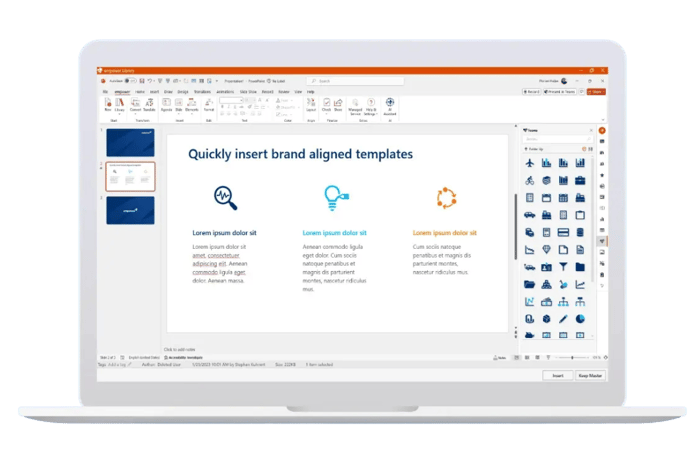
Technologies such as template management systems and branding platforms help automate on-brand work while still allowing flexibility.
What this means:
-
Business teams can create on-brand content on their own.
-
Clear rules and smart templates reduce approval loops.
-
Design and brand standards can be integrated directly into daily tools such as Microsoft 365.
Best practice:
Combine technology with team ownership. Tools help ensure consistency, while brand ambassadors provide guidance and support brand adoption in everyday work.
Practical example: Bayer
Bayer shows how empowerment instead of control can work in practice. In an interview with empower, Sven Theobald, Global Lead Bayer Brand & Corporate Brand Squad, describes the brand as both a value driver and an anchor of trust. For decentralized organizations, the principle of “Freedom in a Frame” is especially relevant. Clear guardrails protect consistency, while teams keep enough freedom to adapt content to the audience, market, and context.
What decentralized brand management can learn from this:
-
Do not wait for teams to visit the brand portal. Bring brand knowledge directly into projects, meetings, internal channels, and training sessions.
-
Position the brand team as an advisory partner. It should help teams make better brand decisions instead of simply approving or rejecting their work.
-
Turn brand guidelines into practical working tools, such as templates, default settings, text modules, and tool integrations.
-
Define clear guardrails, but intentionally leave room for local markets, target audiences, and specific use cases.
-
Use AI where it makes everyday brand work easier. This may include tone-of-voice checks, as Bayer does with its Verbal Identity Agent, which reviews texts for Bayer’s tone. It may also include automated layout checks, asset selection, or the creation of on-brand content.
You can find more specific examples in the interview with Sven Theobald.
4. Define clear responsibilities and streamlined communication processes
When many people are involved, clear roles and transparent workflows are essential. The goal is not to slow teams down. It is to make independent work safer, easier, and more efficient. Unclear responsibilities quickly lead to delays, duplicate work, and inconsistent execution.
What this means:
-
Define clear roles and responsibilities.
-
Brand ambassadors within teams should serve as local contacts and internal advocates.
-
Use standardized approval processes only where they are truly needed, such as by content type, reach, or risk level.
-
Create clear escalation paths for special cases.
Best practice:
Not every activity needs a review process. Segment approvals by relevance. A social media post or presentation requires a different level of review than a global campaign.

5. Apply the 80/20 rule
Not every brand decision needs to be defined in detail. Successful organizations follow a clear principle: 80% of brand parameters are mandatory, while 20% remain intentionally flexible.
What this means:
- Define clear standards for core elements such as logo, typography, color palette, and tone of voice.
- Allow flexibility for local adaptations, audience-specific content, and cultural nuances.
Best practice:
Define what is non-negotiable and what can intentionally vary. This clarity reduces coordination effort while giving decentralized teams the confidence to act.
Conclusion: Brand consistency is now an operating model challenge
Hybrid organizations do not just change the way people work. They also change the way branding works.
For brand and communications leaders, this means less control and more structure. Fewer rigid rules and more enablement.
Organizations that successfully combine clear guardrails with flexible systems achieve both:
- A consistent brand
- Faster execution
The brand is no longer managed only from the center. It is carried, applied, and strengthened by decentralized teams. That is what makes it ready for the future.
Would you like to know how well your brand is set up for decentralized collaboration today? Start by checking whether your teams everywhere have access to current brand guidelines, approved assets, and on-brand templates. A central branding solution like empower® can help teams work more consistently and efficiently every day. We would be happy to support you.


Your brand Strategy: Definition, types, and development

Your guide to successful brand management